Why You Need a Realistic Cleaning Schedule (and This Infographic Helps)
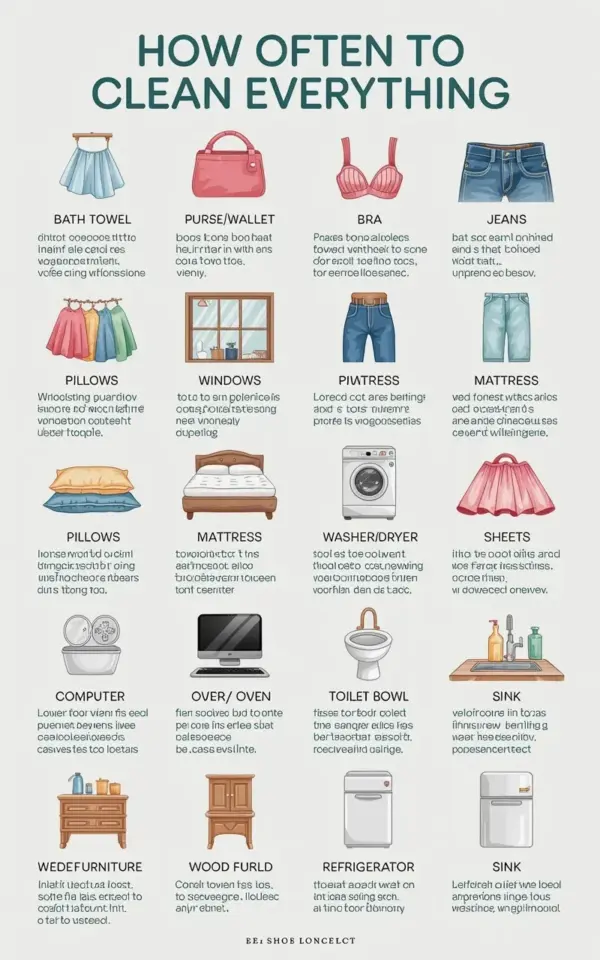
If you have ever stood in your linen closet wondering whether that bath towel is still fresh or stared at your mattress and thought “I should probably clean that,” you are not alone. Most of us guess at cleaning frequencies, and that often means we either overdo it or let things slide for way too long. A solid cleaning schedule takes the guesswork out of the equation. The infographic with the bold teal title “HOW OFTEN TO CLEAN EVERYTHING” lays out 18 common household items in a clean grid format. Each item comes with a simple illustration and a clear recommendation. This article turns that visual guide into a practical how to plan you can actually follow.
The Benefits of a Consistent Cleaning Checklist
When you have a written cleaning checklist, you stop relying on memory and start building habits. Without one, it is easy to forget to wash your sheets for three weeks or to ignore the dust on your windows until spring. A checklist also helps you spread tasks across the month so you never feel overwhelmed by a marathon cleaning day.
Another benefit is hygiene. Towels and bras that are not washed often enough can harbor bacteria and oils that cause skin breakouts or odors. A regular schedule keeps your home fresh and your belongings lasting longer. The infographic shows that bath towels need washing every three uses, while sheets should be cleaned weekly. These are the kinds of concrete numbers that make a checklist truly useful.
You can start by printing the infographic and sticking it on your fridge or bathroom mirror. That visual reminder, with its teal grid and simple icons, makes it easy to see what needs attention each week.
How Often to Wash Towels, Sheets, and Bedding
Let us begin with the items you touch every day. According to the infographic, bath towels should be washed after every three uses. That means if you shower daily and use a fresh towel each time, you will wash it roughly twice a week. Hanging it to dry fully between uses prevents mildew and keeps it smelling clean.
Sheets are recommended once a week. Yes, every seven days. If you are busy, even every ten days is fine, but do not push it past two weeks. Dead skin cells and dust mites accumulate faster than you think. Pillows are a different story. The infographic suggests washing pillows every six months. Put two pillows in the machine at a time with a gentle cycle, then dry them thoroughly. Mattresses should be vacuumed and spot cleaned twice a year. A mattress protector makes this job much easier and cuts down on allergens.
For reference, the infographic also covers carpets. Professional deep cleaning is recommended every 12 to 18 months, but vacuuming weekly is the everyday habit that keeps them fresh.
The Surprising Cleaning Frequency for Clothing and Accessories
Many people over wash jeans and bras, which actually shortens their lifespan. The infographic says jeans only need washing after 5 to 10 wears. Unless you spill something, airing them out between uses is enough. For bras, every 2 to 3 wears is the sweet spot. Hand washing is gentler than machine washing, and it keeps the elastic from stretching out.
Your purse or wallet is a high touch item that rarely gets cleaned. The infographic recommends wiping down the outside and inside with a mild soap solution once a month. You carry it everywhere, so it picks up germs from counters, floors, and public transport. A quick monthly wipe is a simple habit that makes a difference.
This section of the infographic is especially helpful because it challenges the “wash after every wear” mindset. You can save time and extend the life of your clothes just by following these guidelines.
Windows, Washer, Dryer, and Other Household Surfaces
Cleaning windows might feel like a seasonal chore, but the infographic suggests doing them every three months. That frequency works well for interior windows in most homes. Use a squeegee and a microfiber cloth to avoid streaks. If you have pets or live near a busy road, you might need to do them every two months.
Your washer and dryer need maintenance too. The infographic recommends cleaning the washer drum once a month with a cleaning tablet or vinegar cycle. The lint filter on the dryer should be cleaned after every load, but the vent itself needs a deep clean once a year. This prevents fire hazards and keeps your machines running efficiently.
Other items in the infographic include things like light fixtures, remote controls, and kitchen sponges. Each has a specific frequency that helps you stay on top of your household cleaning without spending all weekend scrubbing.
Using the Infographic to Build Your Own Household Cleaning Routine
Now that you know the numbers, the next step is turning them into a real routine. Here is a concrete three step plan using the cleaning infographic as your guide.
- Step 1: Write down the 18 items from the infographic in a notebook or digital note. Group them by daily, weekly, monthly, and seasonal tasks. For example, towels and sheets are weekly. Pillows and mattresses are twice a year.
- Step 2: Pick one day each week for the weekly tasks. Saturday morning works for many people. Add one monthly task (like purse cleaning or window wiping) to that same day. This prevents buildup.
- Step 3: Set a calendar reminder for the seasonal tasks. For mattress cleaning, put it in June and December. For carpet deep cleaning, pick one weekend in spring and one in fall.
This approach makes the infographic actionable. You are not just looking at a pretty grid of teal text and illustrations. You are creating a system that fits your life.
Quick Reference: 18 Items and Their Frequencies
Here is a snapshot of the most common items from the infographic, condensed for quick scanning. Pin the full infographic later for the complete list.
- Bath towel – every 3 uses
- Sheets – every week
- Pillows – every 6 months
- Mattress – every 6 months (vacuum and spot clean)
- Jeans – every 5 to 10 wears
- Bra – every 2 to 3 wears
- Purse/wallet – monthly wipe down
- Windows – every 3 months
- Carpet – professional clean every 12 to 18 months
- Washer/dryer – drum once a month, vent annually
Store this list in your phone or on a sticky note. It is the backbone of a clutter free and truly clean home. Home organization starts with knowing what to clean and when, not just where to put things.
Make It Stick Without Stress
You do not need to clean everything at once. The magic of a schedule is that each small task happens on its own time. The teal infographic with its 18 grid items is a fantastic visual anchor. Print it, take a photo, or save it to your Pinterest board (the original description says “Pin this to reference later,” and I agree). Then pick just one item to tackle today. Maybe it is finally washing that purse or changing your sheets a day early. Small wins build confidence, and before long you will have a rhythm that feels automatic.
Remember, the goal is not perfection. It is a cleaner, healthier home that stays manageable. Start with the infographic, follow the frequencies, and adjust as needed. Your mattress will thank you at the next six month mark.
#cleaning schedule #cleaning checklist #household cleaning #cleaning infographic #home organization
Leave a Comment