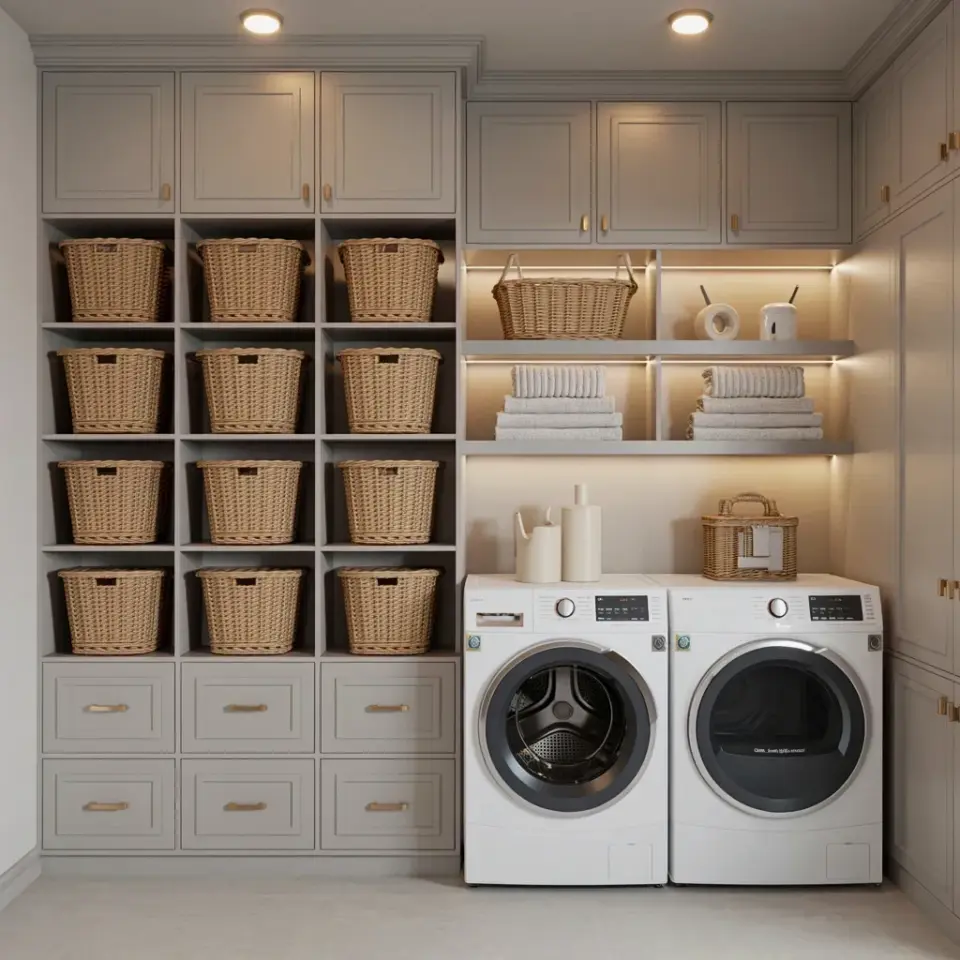
You want to organize your small space, and you want to know how to do it without making that one classic mistake. Honestly, I have been there, standing in the aisle of a home goods store, convinced that a set of cute woven bins would fix everything. Here’s the thing: buying storage before you do anything else is the fastest way to waste money and create more clutter. So let’s talk about how to organize your small space the right way, starting with a step most people skip.
Why decluttering comes before buying storage
The biggest trap in small space organization is thinking more bins equal more order. It does not work like that. Not gonna lie, I once bought a dozen clear plastic boxes because they were on sale, and half of them ended up stacked awkwardly in a corner, holding stuff I didn’t even remember owning.
When you bring home bins, shelves, or baskets before you have edited your belongings, you are essentially paying to organize your junk. You are creating a system for things you should have tossed or donated weeks ago. And then those containers never fit quite right. You shove an oversized bin under your bed, and it sticks out an inch. Or you buy a shelf that is three centimeters too wide for the closet. It drives you crazy, and you end up with a cluttered space that feels even smaller.
So the rule is simple: edit first, measure second, and shop last. It sounds boring, but trust me, it saves you from that sinking feeling when a storage solution does not actually solve anything.
How to edit your stuff ruthlessly (without the guilt)
Ok so, editing is not just throwing things away. It is about making honest decisions. I have a weird rule for this, and it works: if you cannot name the last time you used an item within three seconds, it probably needs to go. Clothes you have not worn in a year? Gone. That bread maker your aunt gave you in 2019? It is taking up prime counter space.
Here is a small list to help you decide fast:
- Does this item have a real home in your space right now? If no, it is homeless clutter.
- Would you miss it if it disappeared tomorrow? Be honest, you probably would not.
- Is it broken, expired, or missing a part? Then it is trash, not treasure.
- Does it make you feel overwhelmed just looking at it? Yes? Goodbye.
Do not try to edit everything in one day. Pick one drawer, one shelf, one corner. Set a timer for fifteen minutes. That is enough. And please, get a donation box and a trash bag ready before you start. Otherwise you will just move stuff from one pile to another, and that is not decluttering, that is shuffling.
Measure your space before you measure your bins
Here is a specific detail that an AI would never think to add, but I am a real person who has learned this the hard way: bring a tape measure everywhere. Not just to the store, but into every nook of your home. I once measured the width of a closet but forgot to measure the depth, and ended up with a shelf that stuck out so far I could not close the door. So frustrating. And I had to return it, which is a pain when you live in a small apartment with no car.
Measure the height, width, and depth of every space you plan to fill. Write it down. Take a photo with the measurements on your phone. Then, when you shop, only look at items that are at least an inch smaller in each dimension. You need breathing room, not a squeeze. And do not forget to measure doorways and hallways. A bin that fits perfectly in a nook might not fit through your front door. I learned that one the hard way too.
The best storage choices for tiny spaces (and what to skip)
Look, you do not need a Pinterest-perfect set of matching baskets. I have tried that. They look great for a week, and then you realize that the big basket is too shallow for blankets and the small one holds two pairs of socks. Instead, go for flexible, modular solutions. Think stackable bins that click together, shelves that adjust, or drawer dividers that can be repositioned.
Avoid the urge to buy “one size fits all” containers. They never fit all. And avoid anything with a lid that requires you to completely clear the shelf to open it. That is a recipe for a messy pile on top of the bin. I personally love clear containers for things like craft supplies or shoes, because I can see what is inside without pulling everything out. But for items you use daily, open bins are way better. You grab and go, no fuss.
One more thing: do not fall for the “underbed storage” trap unless you actually have clearance. Measure the gap between your bed frame and the floor. Many standard bins are six inches tall, but most low-profile beds have only four or five inches of space. You end up with bins that slide halfway under and then stop. Annoying.
Small space organization mistakes that sneak up on you
Honestly, the worst mistake is buying storage before decluttering, but there are a few others that come close. For example, overstuffing drawers. If you have to push hard to close a drawer, it will eventually break, or you will stop using it because it is a hassle. Another is forgetting about vertical space. In a small room, the walls are your best friend. Shelves that go all the way up to the ceiling can hold books, decor, and everyday items, freeing up floor space. But do not put anything too heavy up high, you do not want a disaster.
Also, avoid the “just shove it in a bin” approach. When everything is hidden, you forget what you own. That leads to buying duplicates. I once bought three cans of black beans because I kept shoving them into a deep pantry basket and losing track. So dumb. Use dividers, labels, or even just a simple rule: one in, one out. If you bring something new into your space, one similar thing has to leave.
How to organize a small space on a budget (seriously)
You do not need fancy custom shelving. I have organized my entire apartment using a combination of free cardboard boxes covered in wrapping paper (cheap and cute), tension rods inside cabinets to create extra shelves, and over-the-door hooks for bags and towels. The key is repurposing what you already own before buying anything new.
Look at your own home first. Got a stack of empty shoe boxes? They are perfect for organizing socks, cables, or small tools. Have a wire hanger? Bend it into a hook for scarves. It does not have to be Instagram-worthy. It just has to work. And if you do buy new, check thrift stores and Facebook Marketplace. People get rid of perfectly good storage bins all the time because they bought them without measuring first. (See, the mistake is everywhere.)
Maintaining your organized small space without losing your mind
So you have decluttered, measured, and bought only the storage that fits. Your space looks good. Now what? Honestly, the real challenge is keeping it that way. Small spaces get messy fast because there is no room for error. One mail pile on the counter and suddenly the whole kitchen feels chaotic.
I have a simple system: every night before bed, I spend five minutes putting things back in their designated homes. That is it. Five minutes. I do not reorganize, I just return. And once a month, I do a quick scan for anything that sneaked in that should not be there. A stray magazine, a gift bag, an impulse buy. Out it goes. That small habit has saved me from needing to do a full declutter every six months. Works for me, might work for you.
Which mistake have you made in your own small space? Did you buy bins that did not fit? Overestimate your closet depth? Share your stories in the comments, I would love to hear. And if this post helped you avoid that first big blunder, feel free to pin it for later. Good luck, you have got this.
#smallspaceorganization #homeorganization #organizationtips #declutter #smallspaceliving
Leave a Comment