Why I chose a 24 compartment drawer for baby socks
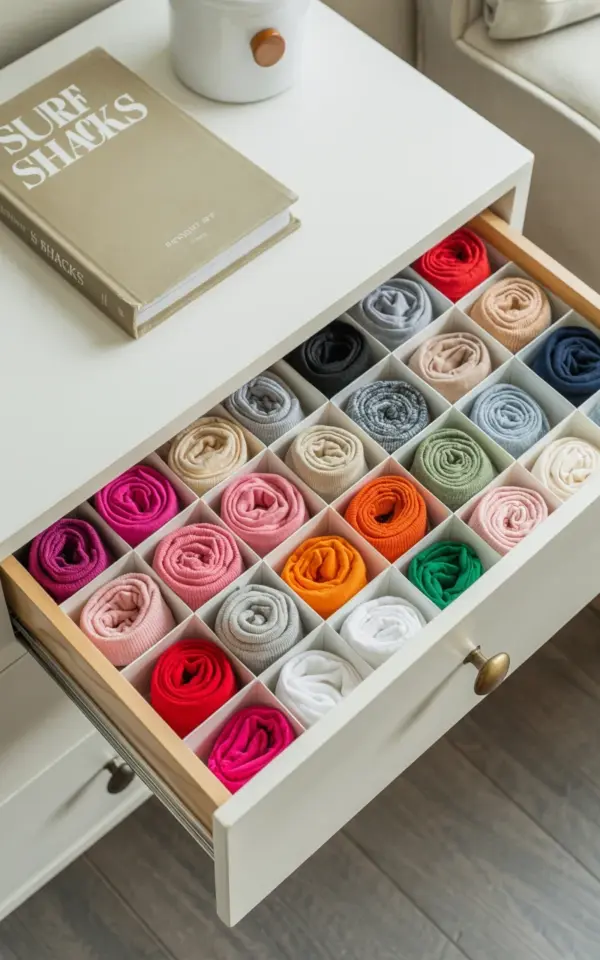
When I was nesting for my second baby, I realized that newborn socks are the most slippery things in the universe. They vanish, they tangle, and they somehow multiply into a pile of chaos. That is exactly why I started looking into newborn sock drawer organization. I found a simple white drawer with brass knobs, and inside it had a 4 by 6 grid of 24 compartments. In the photo, you can see that exact setup. Each compartment is just big enough for a single pair of socks folded into a tight rose petal shape. That grid keeps everything separate, so you never have to dig through a messy drawer while holding a sleepy baby.
The best part is that the compartments are fixed, which means the socks stay put. No sliding around, no losing the tiny pink one behind the gray one. If you are brand new to organizing baby gear, a compartmented drawer like this removes all the guesswork. You just place one folded pair in each square, and the drawer stays looking like this for weeks.
How to fold baby socks with the rose petal method
Rose petal folding sounds fancy, but it is actually the easiest way to turn a wrinkly sock into a neat little circle. I learned it from a friend who folded her baby’s onesies the same way. Here is how you do it with a tiny newborn sock.
- Lay the sock flat on a table, heel side up, with the toe pointing away from you.
- Fold the toe end down toward the heel, so the sock is now about half its original length.
- Starting at the open end, roll the sock tightly toward the folded toe. It should form a spiral, like a cinnamon roll.
- Tuck the last little edge of the cuff into the roll so it stays closed. The result is a compact circle that looks like a rose petal from above.
In the photo, each compartment holds one of these rose petal circles. You can see the perfect round shapes in red, pink, beige, gray, green, orange, and white. The folding method works for any sock size, but for newborn socks it is especially satisfying because they roll up into such tiny, neat bundles.
If you have never tried it, start with just two or three pairs. Once you get the motion down, you will be able to fold a whole load of laundry in under five minutes.
Arranging a rainbow color gradient in your nursery drawer
Rainbow organization is not just pretty. It actually helps you grab the right sock quickly. In the drawer from the photo, the colors flow from red on the left, through pink, then beige and gray, then green and orange, and finally white on the right. That gradient makes it easy to see if any color is missing, and it keeps the drawer visually calm.
You do not need a perfect spectrum. Even a simple grouping by warm and cool tones works. I put all the warm colors (red, pink, orange, beige) on one side and cool colors (gray, green, white) on the other. The key is to decide on a sequence before you start placing the socks, so you do not have to rearrange halfway. If you have neutral shades like white and gray, place them at one end so they act as a visual break.
Rainbow nursery organization also makes outfit planning faster. When you are dressing a newborn in the middle of the night, you can reach for the exact color you want without turning on a bright light. The drawer becomes a tool, not just decoration.
Tips for nesting: preparing your nursery for a newborn
Nesting is that intense urge to prepare your home for the baby. I remember spending hours washing tiny clothes and folding them into perfect piles. That instinct is real, and organizing a sock drawer is one of the most satisfying nesting tasks because it feels immediately rewarding.
- Start with a clean, empty drawer. Wash it with a mild soap and dry it completely before adding any socks.
- Sort all the socks by size. Newborn socks are smaller than 0-3 months, even if the label says otherwise.
- Discard any socks with loose threads or stretched out cuffs. Newborns lose socks easily enough without worn out elastic.
- Fold each pair using the rose petal method and place them in the drawer according to your chosen color order.
- Step back and enjoy the view before the baby arrives. It will not look this perfect forever, but that is okay.
I found that nesting works best when you break it into small, focused tasks. A single drawer takes maybe twenty minutes from start to finish. That is doable even when you are exhausted and your back hurts.
Keeping the drawer tidy with everyday use
No matter how neatly you fold those socks, real life with a newborn will eventually mess up your beautiful grid. The trick is to build a small maintenance habit. Every time you do a load of baby laundry, take two minutes to refold the socks as you put them away. If you wait until the drawer is a tangled mess, you will have to start over from scratch.
I keep a small container of extra folded socks on the changing table for quick grabs. That way I do not have to open the organized drawer for every single sock change. When the container gets low, I refill it from the main drawer and refold any pairs that got shifted. This simple system has kept my rainbow drawer looking photo‑ready for months.
Also, if you have a partner or a helper, show them exactly how you do the rose petal fold. It is much easier to maintain the organization when everyone follows the same method.
What to do with mismatched or seasonal socks
Newborns lose socks constantly. You will end up with singles that do not have a match. I do not throw them away. Instead, I keep a small bin labeled “lonely socks” inside the same drawer. Once a month I check the bin and try to reunite any pairs. If a sock stays in there for more than two months, I repurpose it as a dusting cloth or a toy stuffing filler.
For seasonal socks, like thicker winter booties or tiny sandal socks, I store them in a separate compartment at the very end of the rainbow row. That way they do not disrupt the main color sequence. In the photo you can see the white and gray compartments on the right side, which work well for neutral or seasonal pairs.
If you ever accumulate too many socks, rotate them out. Keep only the current size and season in the rainbow drawer. Store the rest in a labeled bin in the closet. That keeps the drawer from overcrowding and preserves the neat rows.
Starting your own rainbow baby sock storage is one of those small projects that makes you feel ready. It takes a few minutes, costs almost nothing, and gives you a little piece of calm in the nursery. Grab a drawer, fold some socks, and watch the colors come together. If you try it, you will see why so many parents swear by the rose petal method. Save this article for your nesting checklist, and share it with a friend who is expecting.
#organization #nesting #nursery #rainboworganization #sockorganization
Leave a Comment